Bats and Blind Fish: Life in Total Darkness
Cave ecosystems represent some of the most extreme habitats on Earth. Deprived of sunlight, these subterranean worlds are permanently shrouded in total darkness. Despite the absence of light, life has found remarkable ways to thrive. Among the most iconic inhabitants are bats, which use sound to navigate, and cave-dwelling fish that have lost their sight entirely. Understanding how these species function offers insight into the resilience of life and the processes of adaptation under extreme constraints.
The study of cave ecosystems is a growing field, revealing how organisms cope with limited energy, stable temperatures, and the absence of visual cues. Researchers at organisations like Cave Insights continue to document the physiological and behavioural strategies that allow species to persist where conditions seem impossible. By examining the mechanisms behind echolocation in bats and the sensory shifts in blind fish, a clearer picture emerges of how evolution shapes life in darkness.
This article explores the methods and processes that enable these creatures not only to survive but to occupy distinct ecological roles within their communities. It does not claim to offer definitive explanations but rather presents current understanding based on ongoing observation and study.
The Cave Environment: A World Without Light
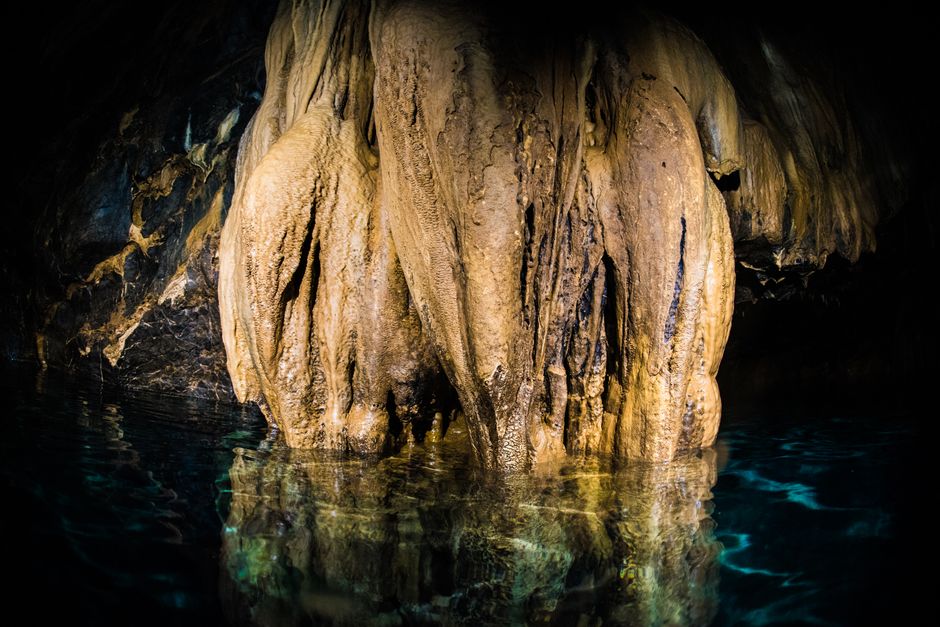
Caves form in various geological settings, but their common feature is perpetual darkness beyond the entrance zone. Temperatures remain stable throughout the year, and humidity is high. Primary production through photosynthesis cannot occur, so energy enters largely from outside. This energy arrives in the form of organic matter washed in by water, carried by animals such as bats, or from bat guano deposited within the cave.
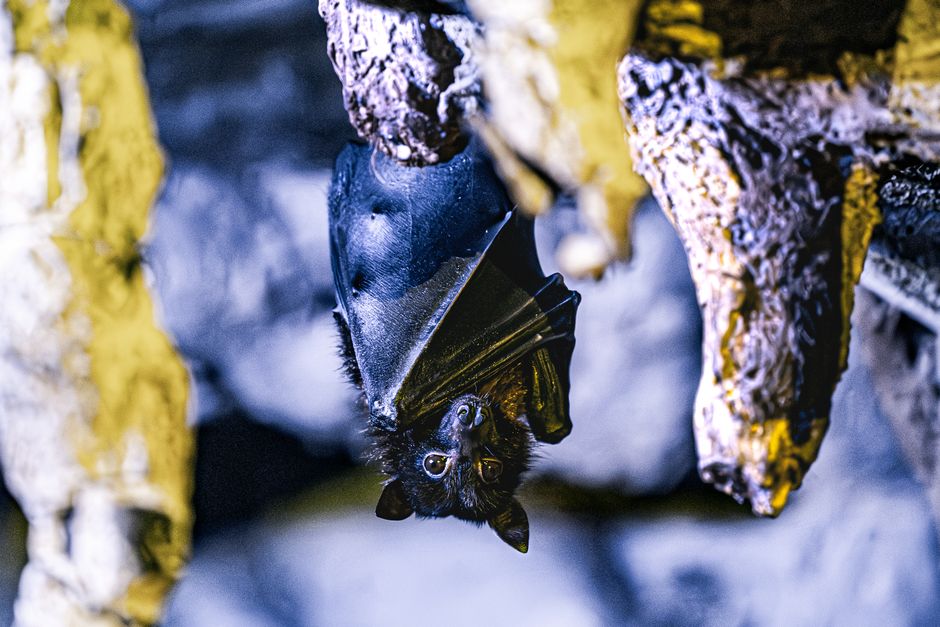
Species that live permanently in the dark zone of caves are known as troglobites, while those that regularly enter and leave are troglophiles. Bats often fall into the latter category, using caves as roosts but foraging outside. Truly cave-adapted fish, however, are troglobites, spending their entire lives underground. These fish exhibit a suite of traits that reflect a long evolutionary history in darkness, including reduced eyes and enhanced non-visual senses. The environment imposes strong selective pressures that favour energy conservation and reliance on other sensory modalities.
The absence of light also influences behaviour. Many cave species have evolved to move more slowly or to rely on vibration and chemical cues to locate food and mates. Understanding the physical parameters of caves helps explain why specific adaptations emerge and how they function in context.
Bat Navigation: The Process of Echolocation
Bats are one of the few mammalian groups to have mastered flight, and many species have taken this a step further by developing echolocation. This biological sonar system allows them to perceive their surroundings by emitting high-frequency sounds and analysing returning echoes. The process is not a simple matter of noise production but involves complex neural processing and fine control of vocalisations.
When a bat calls, it uses its larynx to produce pulses of ultrasound. These sounds travel through the air and bounce off objects such as walls, prey, or other obstacles. The bat’s large, often mobile, ears capture the echoes, which are then processed in specialised regions of the auditory cortex. The time delay between call and echo provides information about distance; differences in loudness and frequency shifts reveal details about size, texture, and movement.
Different bat species vary their call patterns depending on the environment and the type of prey. In open spaces, they may use steady, low-frequency calls, while in cluttered interiors like caves, they alternate more rapidly and adjust frequencies to avoid overlap with echoes. This dynamic control allows them to navigate tight passages and detect small insects near surfaces. Cave-inside roosts often require bats to memorise spatial layouts, and echolocation serves as a real-time guidance system. Research in this area continues to reveal how bats adapt their calls to changing acoustic conditions.
It is important to note that echolocation is not infallible. Interference from background noise, the shape of passages, and the presence of water can affect performance. Bats may sometimes rely on other cues, such as visual landmarks in dim twilight zones or spatial memory. The process is best understood as a flexible toolkit rather than a fixed ability.
Adaptations of Blind Fish: Sensory Shifts and Energy Conservation
Cave-dwelling fish, found in limestone karst regions worldwide, offer a striking contrast to surface fish species. Many have lost functional eyes and pigmentation over generations. The loss of eyes is not an immediate benefit but likely results from the high energy cost of maintaining an unused structure. In the darkness, any mutation that reduces eye development may be favoured because it frees resources for other tissues.
Blind fish compensate for sightlessness through enhanced non-visual systems. The lateral line, a system of sensory organs along the sides of the body, becomes more sensitive in many cave species. This organ detects water currents, vibrations, and pressure changes, allowing the fish to sense approaching prey, avoid obstacles, and perceive the presence of other individuals. They may also rely heavily on chemoreception – taste and smell – to locate food and recognise their environment. For example, blind cavefish can track chemical gradients to find food particles carried by water flow.
Another key adaptation involves metabolic rate. Life in a cave often means unpredictable food supply, so many blind fish have evolved lower metabolic demands and can survive longer periods without feeding. They may store energy as fat more efficiently or reduce activity levels. These traits are not universal but appear repeatedly across different cavefish lineages, suggesting convergent evolution under similar pressures. The processes of adaptation involve both genetic changes and developmental plasticity.
It is also observed that blind fish maintain an acute sense of touch. Barbels or fin rays may be elongated to help navigate physical structures. Some species have been documented to use a form of spatial memory to remember the layout of their home pools. The combination of sensory shifts and energy-conserving traits illustrates how organisms can persist in extreme environments without dependence on vision.
Energy Flow and Nutrient Cycling in Cave Systems
Because caves lack photosynthetic primary producers, their food webs depend on external organic input. This energy comes in several forms: dissolved organic matter carried by percolating water, debris that falls or is washed in, and the guano of bats and other animals. Bat guano is particularly important in many caves, serving as the base of a detritus-based food chain.
Microbes, such as bacteria and fungi, break down guano and other organic matter, releasing nutrients that support invertebrates like springtails, mites, and cave crickets. These, in turn, become prey for larger predators such as spiders, pseudoscorpions, and certain specialised beetles. Fish in cave streams feed on aquatic invertebrates and occasionally on organic particles filtered from the water. The flow of energy is often seasonal, linked to bat colonies’ activity or rainfall patterns.
Understanding these trophic relationships helps researchers see how species like bats and blind fish fit into the broader ecosystem. Bats bring energy from outside, while blind fish recycle energy within the aquatic cave environment. The processes of decomposition and nutrient cycling are slow compared to surface ecosystems, and any disturbance can have long-lasting effects. Conservation efforts often focus on maintaining the integrity of these energy pathways, recognising that the entire community is linked to the import of organic matter.
Evolutionary Processes in Cave Habitats
The repeated appearance of similar adaptations in unrelated species across different caves points to strong selective pressures shaping evolution. This phenomenon, known as convergent evolution, is observable in traits such as eye loss, enhanced non-visual senses, and depigmentation. Yet the genetic mechanisms behind these changes can differ between lineages, indicating multiple paths to the same outcome.
Gene expression studies in blind cavefish have identified mutations in genes controlling eye development, phototransduction, and melanin production. Some of these changes appear to be under positive selection, while others may be due to relaxed selection – a process where traits that are no longer beneficial are not actively maintained and gradually disappear. The interplay between selection and random genetic drift in isolated cave populations also contributes to divergence between species.
Bats in caves undergo similar, though less extreme, evolutionary pressures. While they retain functional eyes, cave-dwelling bat populations may show adaptations in echolocation frequency or wing morphology that suit tight spaces. Speciation in caves often involves geographic isolation, with separate cave systems fostering distinct lineages. Over long timescales, these processes can generate unique biodiversity found nowhere else. Research in this area continues to clarify how adaptation proceeds when sensory cues change fundamentally.
Methods of Studying Cave Life
Investigating cave ecosystems requires specialised techniques that minimise disturbance to fragile habitats. Researchers often use cave mapping to locate species and understand spatial distribution. For biological studies, methods include passive acoustic monitoring for bat echolocation calls, video recording in infrared light to observe behaviour without disturbing darkness, and non-lethal sampling of fish for genetic analysis.
Environmental variables such as temperature, humidity, and water chemistry are measured over time to correlate with biological activity. For example, researchers at Cave Insights may deploy data loggers that track conditions while leaving minimal footprint. To study fish sensory biology, laboratory experiments are sometimes conducted with captive populations raised in controlled conditions that mimic cave environments.
Conservation studies also evaluate threats such as pollution, tourism, and groundwater extraction. Because cave species are often endemic and have low reproductive rates, they are particularly vulnerable. Research findings inform management practices that aim to preserve both the physical structure of caves and the ecological processes within them.
The study of bats and blind fish offers a window into the broader principles of adaptation. By focusing on processes rather than outcomes, scientists can build a more complete understanding of how life persists in the total darkness of caves.